Dispatch note · 19 Nov 2026
Custom packaging: MOQ, tooling and the drop test that decides the carton
A printed carton is a tooling decision before it is a design decision. The MOQ, the plate cost and the burst strength decide whether the packaging is a brand asset or a cost centre.
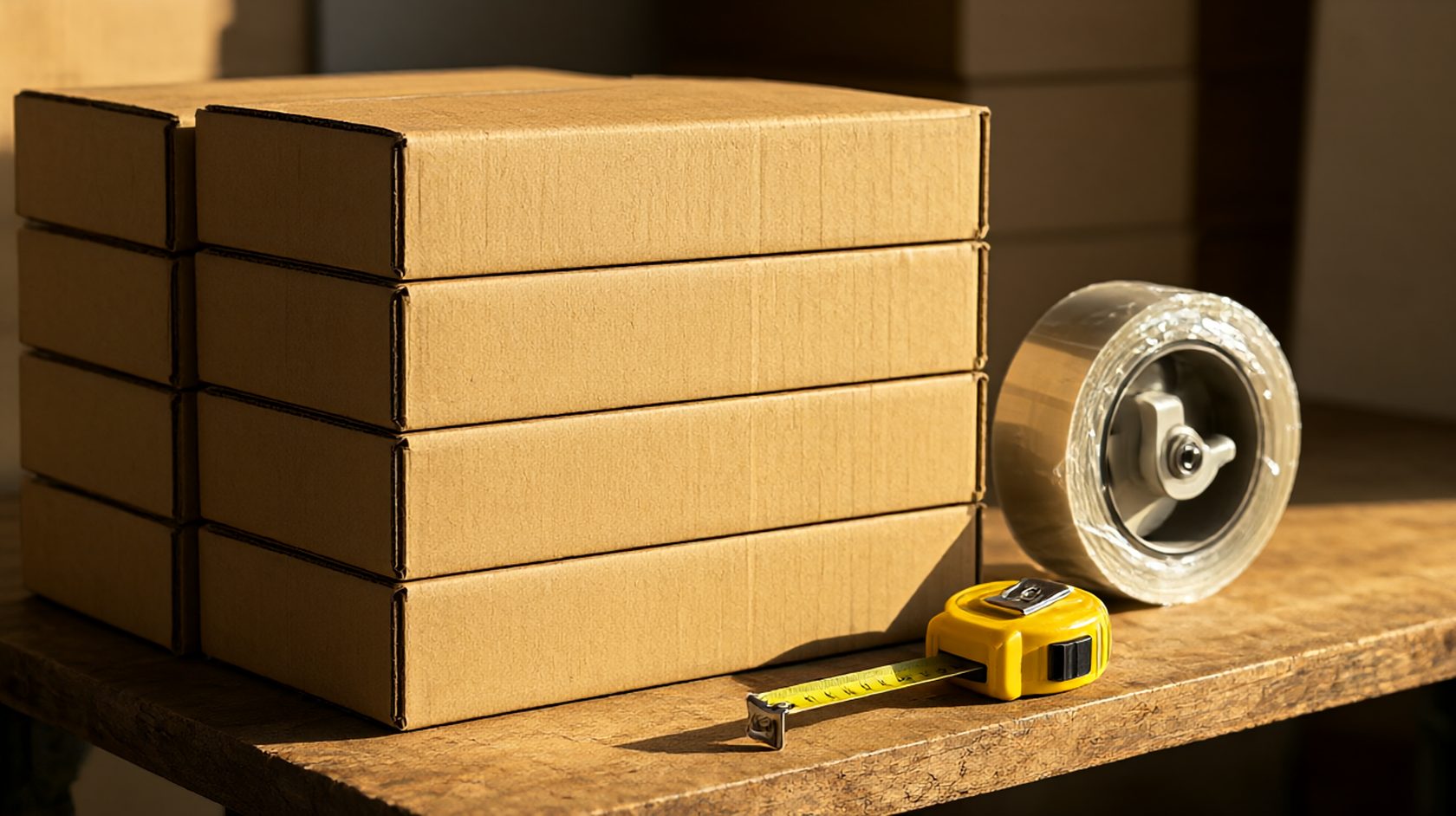
The four costs behind a printed box
A custom carton carries four costs: the substrate, the print, the tooling and the minimum order. The first two scale with volume; the last two do not.
Tooling is the plates, the die and the sample. It is paid once and amortised over the run, so a small run carries a large tooling cost per unit.
The minimum order is set by the printer's setup time rather than by the paper, and it is usually expressed in sheets or in cartons rather than in units.
A brand comparing quotes without separating these four is comparing a per-unit price that will change the moment the volume changes.
Print method, colour and the small run
Flexographic printing is cheap at volume and expensive to set up; digital printing has no plates and a higher per-unit cost.
For runs under a few thousand, digital printing usually wins on total cost even though its unit price looks higher; for runs above ten thousand, flexo wins.
Colour consistency is the other variable: flexo on kraft board shifts colour with the substrate, and a brand colour that is specified as a Pantone will drift unless it is proofed on the actual board.
A brand should ask for a proof on the production substrate, not on white paper, before approving the artwork.
Board grade and the burst strength
The carton's board grade is described by its flute and its burst or edge-crush strength. A single-wall B-flute and a single-wall E-flute behave differently in a drop.
The board's strength is set by the product's weight and the drop height it must survive, not by the printer's preferred stock.
A carton that is too strong costs money and a carton that is too weak costs returns. The grade should be chosen from the test, not from the price list.
The brand should state the board grade on the specification, and should check that the delivered cartons match it, because a downgrade is invisible until the first damaged parcel.
The drop test and the standard behind it
A parcel is tested by dropping it from a defined height onto a defined surface, at several orientations, and by checking the product afterwards.
The common consumer standard is a sequence of drops from around seventy centimetres for a parcel in the one-to-five kilogram range, with the number of drops and the orientations defined.
The test is run on the packed product, not on the empty carton, and it is run on the production pack rather than a prototype, because the inserts and the tape are part of the system.
A brand that has not seen a drop test report has not verified its packaging, and the first evidence it will get is a customer photograph of a crushed box.
Inserts, void fill and the cost of protection
The insert is what converts a carton into a protective system: a moulded pulp tray, a corrugated fitment, a foam block or a paper honeycomb.
Moulded pulp is the cheapest protection per unit at volume and needs a tool; corrugated fitments need a die and are cheaper at lower volume.
Void fill that is loose - air pillows, paper - protects against shock but not against puncture, and a product with sharp corners needs a fitment rather than fill.
The insert's cost should be counted in the landed cost of the pack, and a design that saves ten cents on the insert and doubles the damage rate is a design that loses money.
Dimensional weight and the carton's arithmetic
A carrier charges by the greater of actual weight and dimensional weight, and dimensional weight is the volume divided by a divisor set by the carrier and the service.
A carton that is five centimetres too tall on every dimension can move a parcel into a higher weight band without adding any product weight.
The packaging design should therefore be driven by the product's dimensions plus the protection, and not by the printer's standard die sizes.
A brand that measures its own cartons and compares them with the carrier's divisor can usually find ten per cent of volume to remove, and that ten per cent is a direct saving on every order.
MOQ, versioning and the reprint decision
A packaging MOQ that matches a year's demand is cheap per unit and expensive if the design changes in month three.
A brand should plan the print run against the design's expected life, and should hold a version code on the artwork so that an old carton can be identified in the warehouse.
The reprint decision should compare the tooling cost, the storage cost of the old cartons and the marketing value of the change, and it should be made before the old cartons run out.
A brand that reprints on impulse pays the tooling again, and a brand that never reprints keeps a design that no longer matches its product.
The packaging as a quality record
The packaging specification should list the board grade, the print method, the ink, the insert, the tape and the label, with a sample of each approved and held.
Those approved samples are the reference for every later shipment, and a factory that changes the tape or the insert without telling the brand changes the pack.
The specification should also state the pack's target weight and its target outer dimensions, so that a change is detectable by measurement rather than by complaint.
The approved sample and the written specification together are the only defence against a silent downgrade.
The carton as a data carrier
The carton carries a barcode, a batch or a serial, a country of origin and sometimes a handling symbol, and each of those is a data requirement rather than a graphic.
The barcode's size, quiet zone and contrast must survive the print method and the board's absorbency, and a barcode that scans at the plant but not at the warehouse is a rework queue.
The symbol's placement should avoid the tape, the die's folds and the area the carrier's label will cover.
A packaging spec that lists the barcode's symbology, size and placement is a packing line that runs, and a spec that omits them is a line that stops.
Sustainability claims and the packaging tax
Several markets now tax or regulate packaging by weight, by material and by recyclability, and the carton's specification is the tax's input.
A single-material carton with water-based ink and no lamination is the design that scores well under most schemes, and it costs less to dispose of.
A brand should compute the packaging's declared weight and material mix before the print run, because a change after the tooling is paid is expensive.
The sustainability claim on the box is a claim like any other and needs evidence behind it, not a leaf symbol.
The short version
A printed carton is four costs - substrate, print, tooling and minimum order - and only the first two scale with volume.
Choose the board grade from the drop test on the production pack, and choose the print method from the total cost at the volume you will actually run.
Measure your own cartons against the carrier's divisor, keep an approved sample, and put a version code on the artwork.
Two final numbers
Track damage claims per thousand parcels, and the carton's volume against the carrier's divisor band.
A damage rate that falls after a carton change pays for the tooling within a season, and the divisor band is a direct saving on every order.
The one-page spec
The packaging spec should fit on one page: board grade, print method, insert, carton dimensions, barcode, approved sample number and version code.
The page is signed by the brand and filed with the approved sample, so that a later batch can be checked against it rather than against memory.
A packaging programme that quotes tooling, MOQ and board grade separately is the custom packaging programme, and those three numbers are what the drop test actually depends on.
What to check
- Four costs separated: substrate, print, tooling, MOQ
- Print method chosen on total cost at the planned volume
- Proof on the production substrate, not white paper
- Board grade and burst strength stated and verified
- Drop test report on the production pack
- Insert type and void fill matched to the product's corners
- Carton dimensions measured against the carrier's divisor
- Approved sample and specification held as the reference