Dispatch note · 19 Nov 2026
Freight mode selection: air, sea, rail and the arithmetic of the promise
The freight mode decides the delivery promise, the working capital and the peak-season risk at the same time. Choosing on rate alone chooses badly.
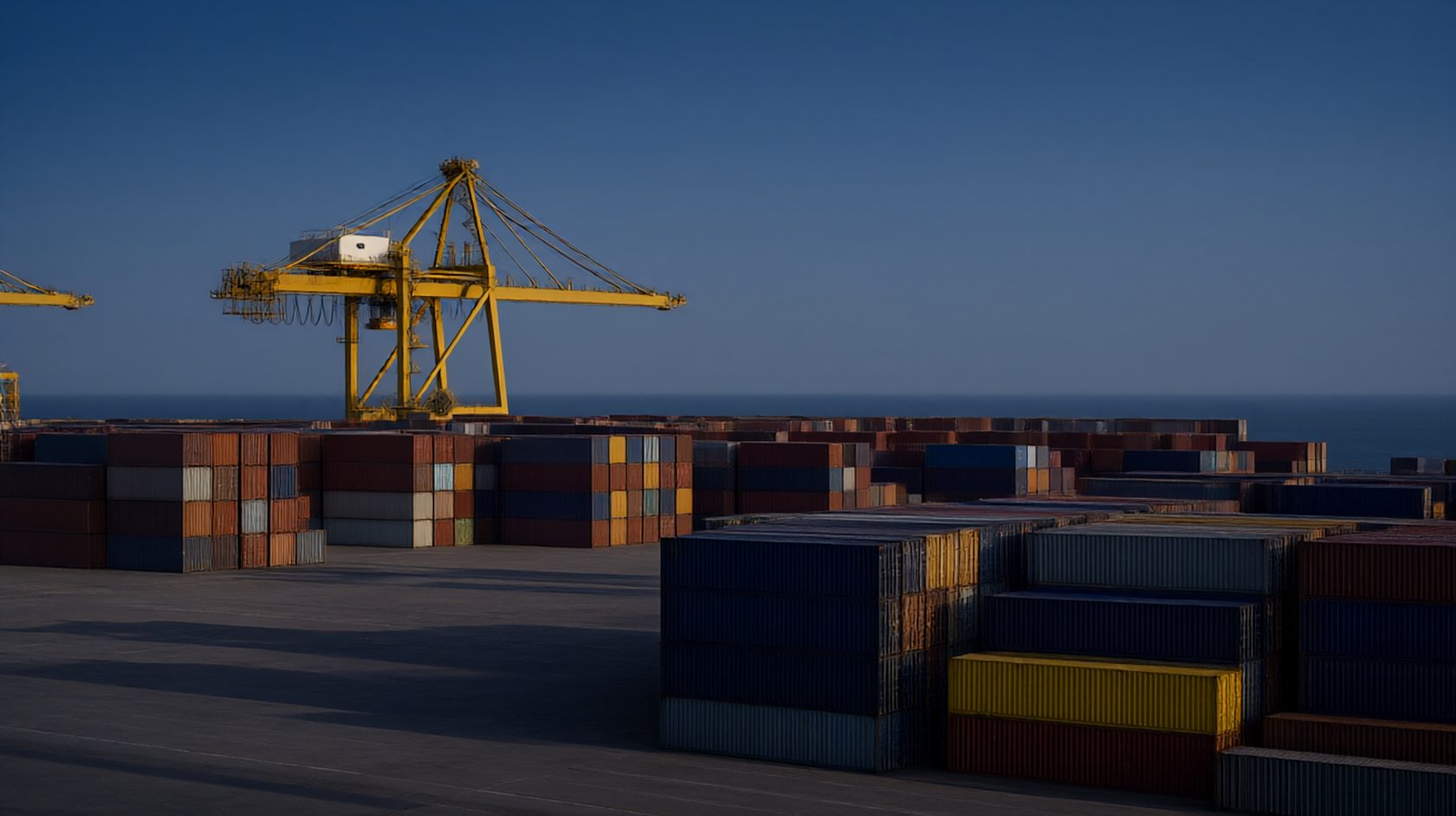
Four modes, four cost structures
Air freight is priced per kilogram and charges a high rate for a short transit. Sea freight is priced per container and charges a low rate for a long transit.
Rail between China and Europe sits between the two: faster than sea, cheaper than air, and constrained by a smaller network and by border crossings.
Road is a distribution mode rather than an import mode, and it appears in the chain after the port or the rail terminal.
The mode's cost structure matters as much as its rate: air charges for weight, sea charges for volume, and a light bulky product is cheap by sea and ruinous by air.
The chargeable weight and the volume game
Air freight charges the greater of actual weight and volumetric weight, with a divisor around six thousand for cubic centimetres per kilogram.
A product in a carton that is mostly air pays for the air. Reducing the carton's volume or shipping it unassembled changes the air cost more than negotiating the rate does.
Sea freight charges by container, so the question is whether the cargo fills the box by volume or by weight. A container that is half empty is a container the brand is paying for twice.
A brand should compute the chargeable weight in both modes for its actual cartons before it compares the quotes, because the two quotes are priced on different quantities.
Transit time and the working capital
A sea shipment ties up cash for the transit plus the production lead time; an air shipment releases the cash weeks earlier.
The comparison is not freight cost against freight cost, but freight cost plus the carrying cost of the inventory plus the cost of the stockout it prevents.
A product with a forty per cent margin can afford air freight for a launch and rarely for a replenishment; a product with a fifteen per cent margin cannot afford air at all unless the alternative is a stockout.
The brand should compute the landed cost per unit in each mode, including duty, insurance and the cash cycle, and compare it with the retail price and the expected sell-through.
Reliability and the tail of the distribution
Sea transit has a mean and a spread: a twenty-eight-day mean can arrive in twenty-four or in forty, and the forty is what the promise has to survive.
Air is tighter but not immune to congestion, and a hub closure can add days without warning.
Rail has a wide spread at the borders, and the spread is the reason rail is difficult to promise even though its mean is attractive.
The mode's promise should be built from its ninety-fifth percentile transit, and the brand should keep a buffer of safety stock sized for that tail rather than for the mean.
Peak season and the capacity you cannot buy
Ocean capacity is sold forward, and the weeks before a major retail event are booked months ahead. A brand that decides late pays a premium or flies.
Air capacity is more elastic but also tightens at the same moment, and the rates in the last two weeks before a peak can double.
The mode decision for a peak shipment should be made at the booking window, not at the ship date, and the brand should hold a contingency booking for its top SKUs.
A brand that plans its peak freight in the peak is paying for the planning it did not do.
Consolidation and the LCL trap
Less-than-container load lets a small brand ship without filling a box, at a rate per cubic metre that is higher than a full container's.
The LCL chain adds a consolidation warehouse, a deconsolidation warehouse and two more handling events, each with its own damage and delay risk.
A brand shipping more than about eight cubic metres per month should model a full container against LCL on the landed cost, because the crossover arrives earlier than most expect.
The LCL option should be used for the launch and for the slow lanes, and it should be priced with the extra handling included.
The mode mix, not the mode choice
Most mature brands run a mix: sea for the bulk of the replenishment, air for the tier A stockout, rail for the middle lane, and a buffer of safety stock that makes the mix possible.
The mix should be set per SKU tier, and it should be reviewed as the demand curve and the freight market move.
The freight budget should be expressed as a percentage of revenue with a target, and the mix should be managed against that target rather than against a single lane's rate.
A brand with one mode has one risk; a brand with a managed mix has a portfolio.
The documents that travel with the cargo
Every mode carries its own paperwork: the air waybill, the bill of lading, the rail consignment note, the commercial invoice, the packing list and the certificate of origin.
The invoice's value and the HS code decide the duty, and a code that is chosen for the lowest duty rather than for the product's actual nature is an audit waiting to happen.
The documents should be checked before the cargo moves, because a discrepancy discovered at the destination is a delay with storage charges attached.
A brand should keep a document checklist per mode and per destination, and should verify it against the forwarder's own list rather than trusting one of them.
The lane, not the country
Freight performance is a property of a lane - origin port, destination port, carrier, service - and not of a country pair.
Two lanes into the same country can differ by a week in transit and by a third in cost, and a brand that quotes a country-level rate is quoting an average of lanes it does not use.
The rate card should be built lane by lane, and the routing decision should be made per lane against the delivery promise.
A brand that knows its three best lanes and its two worst is a brand that can renegotiate with evidence.
Demurrage, detention and the clock at the port
A container that sits at the destination port accrues demurrage, and a container that is held by the consignee for unpacking accrues detention, and the two clocks have different rates.
The free days are counted from the discharge, not from the booking, and a shipment that is late for a customs document loses days it cannot recover.
The brand should book the delivery appointment before the vessel's ETA, not after the arrival notice, because the appointment calendars fill.
The demurrage line on the invoice is the visible cost of a document error, and the desk should treat it as a quality metric rather than as a cost of doing business.
The short version
Air prices weight, sea prices volume, rail prices a lane with a wide tail, and the mode decision is a landed cost comparison with a promise attached.
Compute chargeable weight in both units, build the promise from p95 transit, and book peak capacity at the window rather than at the ship date.
Manage a mode mix per SKU tier against a freight budget, and keep demurrage on the quality dashboard instead of in the overheads.
Two final numbers
Track the freight cost as a share of revenue per lane, and the share of shipments that arrived inside the promised percentile.
A lane that misses its percentile consistently is a lane whose mode should change, whatever its rate says.
The one-page lane sheet
Each lane gets one row: chargeable weight basis, p95 transit, free days, demurrage rate, booking window and the mode used for tier A.
A lane sheet that fits on one page is a lane sheet that gets used in the weekly review rather than filed after the shipment.
The sheet is rebuilt every quarter, because the carrier's network and the free-day terms move more often than the contract does.
A logistics desk that prices a lane in both chargeable weights is the cross-border logistics desk, and the comparison it produces is the only one that holds across modes.
What to check
- Chargeable weight computed in both air and sea units
- Landed cost per unit per mode, including duty and cash cycle
- Promise built from the mode's p95 transit
- Peak booking made at the window, with a contingency booking
- LCL versus FCL crossover modelled at the brand's volume
- Mode mix set per tier and reviewed against a freight budget
- Document checklist per mode and destination