Dispatch note · 19 Nov 2026
Overseas warehouse stocking: SKU tiers, reorder points and the cash you tie up
An overseas warehouse converts cash into inventory three weeks before the sale. The stocking plan decides whether that conversion is a margin or a write-off.
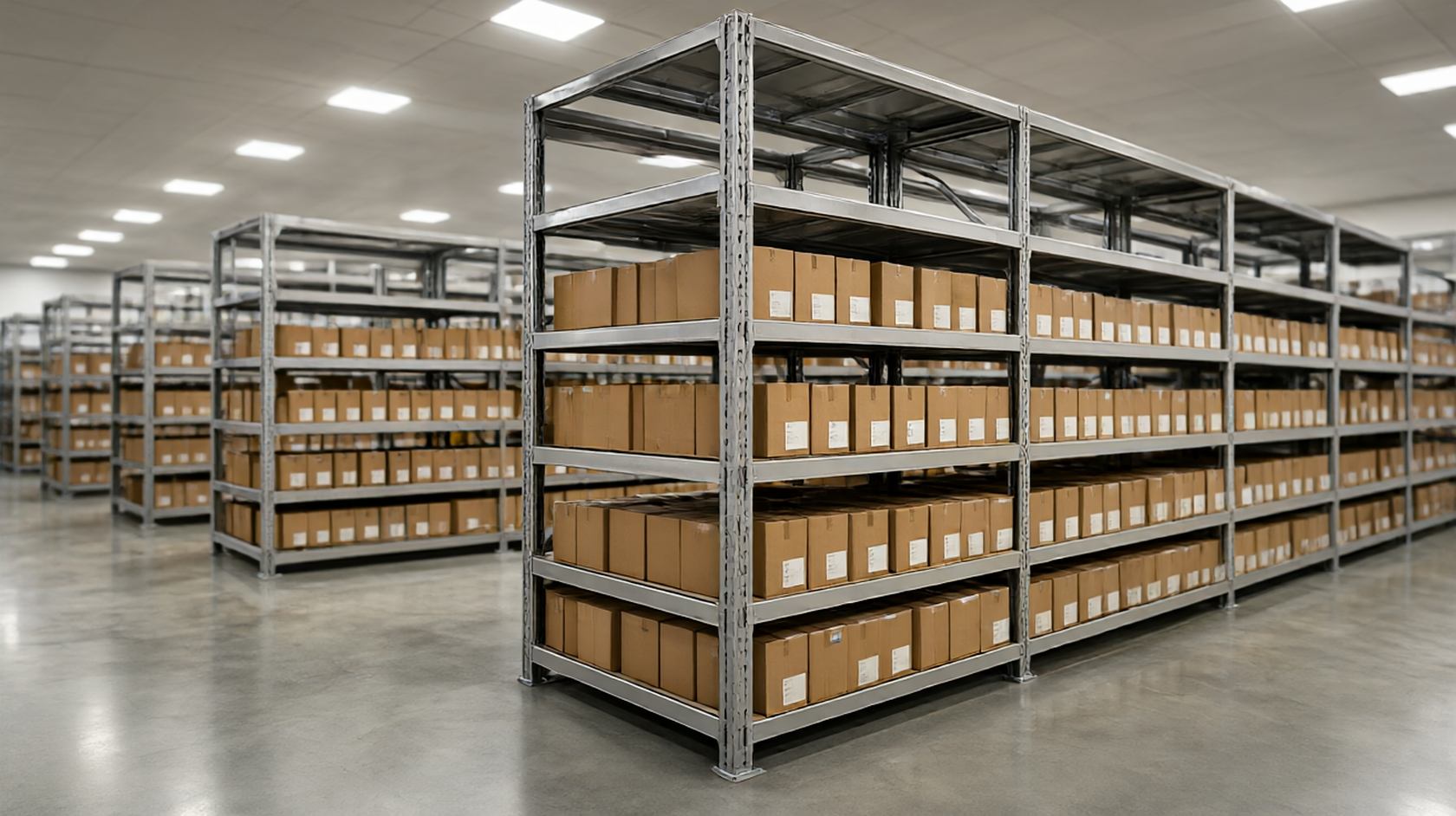
What a forward position actually buys
Stock placed in a destination warehouse buys transit time: a parcel ships in a day rather than in three weeks, and the store can promise two-day delivery instead of a month.
It also buys risk. The inventory is committed, the duty is paid, and if the product does not sell the cash is stranded a customs border away from the decision-maker.
The stocking decision is therefore a bet on demand with a fixed stake and an uncertain payoff, and it should be sized like a bet rather than like a warehouse fill.
A brand that stocks everything in the destination warehouse has bought speed everywhere and risk everywhere; one that stocks nothing has bought neither.
Tier the catalogue before you tier the warehouse
The first step is a tier list, not a purchase order: which SKUs earn their place in the forward position and which are better shipped from origin per order.
Tier A is the small set of SKUs that carry most of the volume and most of the marketing. Tier B is the long tail that sells steadily but slowly. Tier C is the launch and seasonal set that may or may not move.
Tier A belongs forward, with a reorder point calculated from lead time and demand variance. Tier C belongs at origin until the demand signal is real.
A catalogue tiered this way usually sends twenty per cent of the SKUs forward, and that twenty per cent carries sixty to eighty per cent of the orders.
The reorder point is a statistical object
The reorder point is the demand during the replenishment lead time plus a safety stock sized by the variability of both.
Lead time here is the whole chain: production, consolidation, freight, customs clearance and receiving. A brand that uses the freight time alone understates the lead time by weeks.
Safety stock is the buffer that covers the variance. It is not a percentage of the order; it is a function of the demand's standard deviation and the service level the brand wants to hold.
A service level of ninety-five per cent is usually right for tier A and expensive for tier B, and the difference should be decided per tier rather than as a single policy.
Cash, duty and the cost of a stranded unit
A unit in a destination warehouse has already paid duty, freight and handling. Its landed cost is not the factory price, and a markdown that looks acceptable against the factory price may be a loss against landed cost.
The brand should know the landed cost per SKU before it sets the stocking quantity, because the markdown decision at the end of the season is made against that number.
Duty drawback, where available, can recover part of the duty on re-exported goods, and the warehouse's reporting has to support the claim. A brand that does not ask for the report cannot claim.
The write-off of a stranded unit is the worst outcome of the stocking decision, and it is usually the outcome for the tier C SKUs that were never meant to go forward.
Replenishment cadence and the booking window
A forward warehouse is replenished on a cadence: weekly consolidation, fortnightly container, monthly sea shipment. The cadence sets the minimum lead time and the maximum flexibility.
A weekly consolidation gives a short lead time at a higher freight cost; a monthly container gives a low cost and a long commitment. Most brands run both, with the expensive lane for tier A replenishment.
The booking window is the constraint that catches brands out at peak. Ocean space books out weeks ahead, and a brand that decides its Q4 purchase in October is buying air freight.
The cadence and the booking window should be written into the stocking calendar, with the decision dates marked, so that the purchase order is placed before the window closes.
The exception inventory
Some inventory does not fit the tier model: returns, refurbished units, promotional bundles and the last of a discontinued SKU.
Returns that are resellable should return to the forward pool rather than to origin, because the customer is in the destination market and the resale will be there too.
A refurbishment operation in the destination warehouse converts a return into a sellable unit at a fraction of the cost of a new one, and it needs a grading standard and a separate SKU.
The exception inventory should be visible in the same system as the main pool, or it becomes invisible stock that the store oversells against.
What to review monthly
Four numbers make the review: days of cover per tier, sell-through against the plan, stockout rate on tier A, and stranded units at the end of the cycle.
Days of cover that grows without a demand increase is a purchasing problem, and it should be caught before the container arrives rather than after.
Stockout rate on tier A is the number that shows whether the safety stock is set correctly; a rate near zero with high safety stock means the buffer is oversized.
Stranded units at the end of the cycle feed back into the tier decision, and a SKU that strands twice should leave the forward position permanently.
The physical arrangement follows the tiers
Fast movers should sit in the pick face closest to the packing stations, because the picker's walk time is the largest component of a pick.
The warehouse should assign locations by velocity and reserve the deep storage for the slow tiers and for the replenishment buffer.
A brand can ask for a slotting review twice a year, and the report should show the pick distribution before and after. A warehouse that will not do the review is a warehouse that charges for walking.
The slotting decision is the warehouse's, but its cost lands on the brand's pick fee, so the brand has a legitimate interest in how it is made.
The SKU that should never go forward
Any SKU whose demand is unproven, whose size is awkward or whose margin cannot absorb the landed cost belongs at origin until the signal is real.
A launch SKU placed forward on a hunch converts a test into a commitment, and the test's cost becomes the markdown's cost.
The forward list should be reviewed quarterly against sell-through, and a SKU should need two consecutive cycles of evidence before it is added.
A brand that adds SKUs to the forward pool faster than it removes them is a brand whose warehouse fills with the wrong inventory.
Multi-warehouse splitting and the promise
A second destination warehouse reduces transit time for one coast and doubles the stock requirement for the same service level.
The split should be decided by demand geography and by the cost of lost sales on each coast, not by the warehouse's rate per pallet.
A brand with two warehouses needs a stock allocation rule, and the rule should be written before the first split, because ad hoc allocation is how a coast runs dry.
The second warehouse is worth it when the transit saving exceeds the duplicate safety stock plus the extra receiving and handling.
The short version
Forward stock buys transit time and sells flexibility. It should be sized like a bet, not like a warehouse fill.
Tier the catalogue first, compute the reorder point from the full lead time, and keep the size-and-margin-awkward SKUs at origin.
Review days of cover, sell-through, tier A stockouts and stranded units every month, and let a SKU that strands twice leave the forward pool.
Two final numbers
Track landed cost per SKU against retail price, and track the share of forward stock that was sold at full price rather than at markdown.
The second number is the stocking plan's actual return, and it is the one to review before the next purchase order.
The one-page plan
The stocking plan fits on one page: tier list, reorder point, cover days, landed cost and the review date for each SKU in the forward pool.
Where the forward position has to be sized rather than filled, the overseas warehousing and stocking is the operation to model against, because its slotting and replenishment cadence set the real lead time.
What to check
- Catalogue tiered A/B/C before the purchase order
- Reorder point from full lead time plus safety stock
- Service level set per tier
- Landed cost per SKU known before quantity is set
- Replenishment cadence and booking window in the calendar
- Exception inventory visible in the same system
- Monthly review of cover, sell-through, stockout and stranded units